Game Day Happens on Every Screen. Your Media Plan Should Too.
Football season is one of the few stretches of the year when big audiences show up live, week after week, for months. The NFL and college football run from September into February. October adds the MLB postseason.
A fan's game day also spreads across a lot of screens. There's a podcast on the morning drive and a grocery run for game-day food. The game itself plays on connected TV while a phone stays in hand the whole time. Scores, highlights and shopping come after the final whistle.
A plan built around the TV spot alone misses most of those moments.
Follow the fan across the day
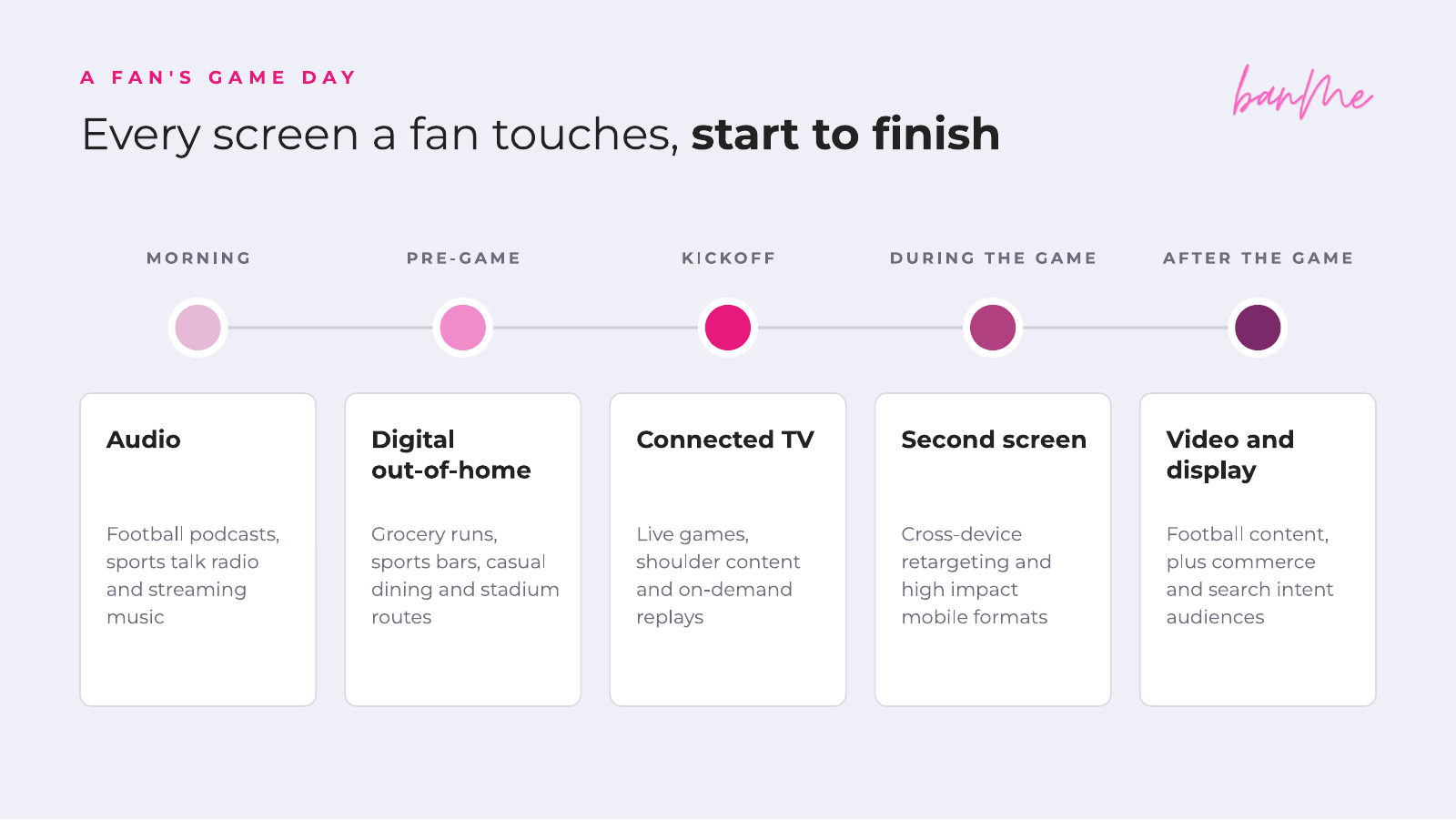
Each part of game day calls for a different channel.
Morning: audio. Football podcasts, sports talk radio and streaming music reach fans on the drive, at the gym and around the house.
Pre-game: digital out-of-home. Screens in grocery stores, sports bars, casual dining spots and near stadiums reach fans while they stock up and settle in.
Kickoff: connected TV. Live games, shoulder programming and on-demand replays put brands in front of engaged viewers, often watching together.
During the game: the second screen. Many viewers keep a phone in hand while they watch. Cross-device retargeting follows them from the TV to mobile. High impact formats hold attention during breaks in play.
After the game: video and display. Contextual placements on football sites reach fans checking scores and highlights. Commerce and search intent audiences reach the ones ready to buy.
Show Image
Buy it as one package
Buying each channel on its own means separate budgets, separate reporting and gaps in between. One programmatic package covers every screen under a single plan and makes frequency easier to manage across them.
Programmatic buying also keeps the plan flexible. With no upfront commitments, budget can shift toward the matchups, markets and moments that perform. Premium live sports supply is available across the NFL and college football seasons, with sample inventory from DIRECTV, DISH, ESPN and NBCUniversal.
Plan the season in three phases
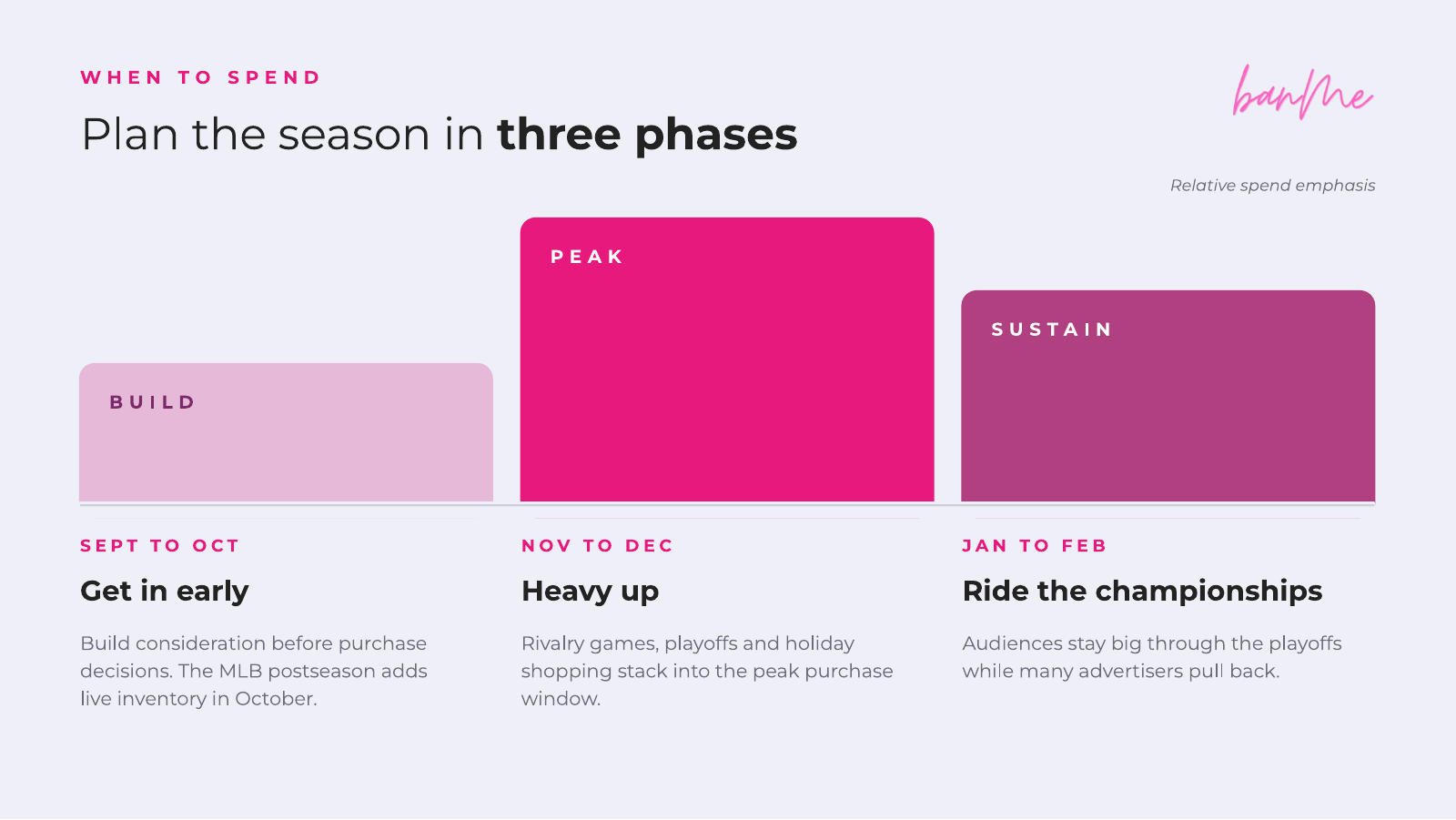
Football season is a long runway. When you spend matters as much as where.
September to October: get in early. Search interest climbs weeks before people buy. Brands that build consideration at the start of the season are already familiar when purchase decisions arrive. The MLB postseason adds another round of live inventory in October.
November to December: heavy up. Rivalry games, playoffs and holiday shopping all land in the same window. This is the peak purchase period, and it deserves the most weight.
January to February: ride the championships. College and pro playoffs keep audiences big through the title games. Many advertisers pull back after the holidays, which leaves room for the brands that stay in.
Show Image
Measure what the season moved
A season-long plan needs proof that it worked. Three measures cover most of what matters.
Brand lift compares awareness and consideration among exposed fans against a control group.
Footfall attribution tracks store and venue visits driven by DOOH and mobile.
Incrementality isolates the conversions that would not have happened without the campaign.
Pre- and post-campaign AudienceIQ reports add audience insight before and after the flight, so each phase can inform the next.
The bottom line
Football season rewards brands that show up early, stay consistent and meet fans wherever they are watching, listening or shopping. The plan should follow the fan across the whole day and the whole season.
banMe's football season package brings CTV, audio, DOOH, video, display, cross-device retargeting and high impact formats together in one programmatic buy. Measurement is included at no cost, and creative production is available. Talk to our team to build your season plan.