Hispanic Media Buying: Why Spanish-Only Plans Miss the Largest Segment
The U.S. Hispanic audience is 65 million people with roughly $2.7 trillion in annual spending power. Most plans built to reach it start from one assumption: that reaching Hispanic consumers means advertising in Spanish. The data does not support that.
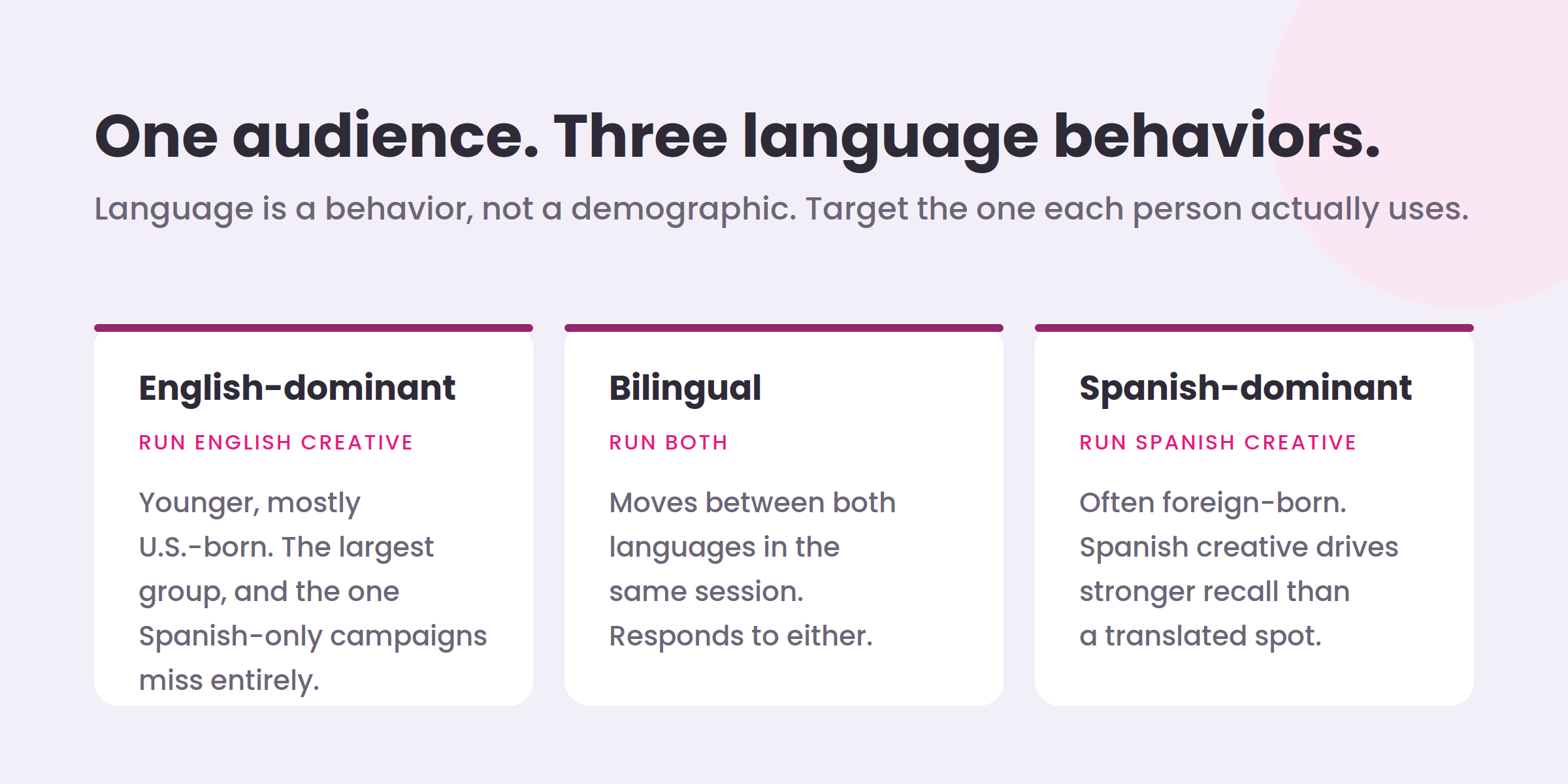
The audience splits three ways
Ethnicity is a demographic. Language is a behavior, and behavior determines whether creative lands.
English-dominant. Younger, mostly U.S.-born, and the largest of the three groups. It grows through generational change rather than immigration. A Spanish-only campaign does not underperform here. It never reaches them.
Bilingual. Moves between both languages inside a single session. Responds to either, which makes this the most forgiving group to plan against.
Spanish-dominant. Often foreign-born. This is where in-language creative earns its place, and where the distinction between Spanish creative and translated creative shows up. Idiom, pacing, and cultural reference do not survive translation, which is why a translated general market spot underperforms creative built in Spanish.
One in five Hispanic adults get their news mostly in Spanish. Another 23% use both languages equally. The majority of the audience is bilingual or English-primary.
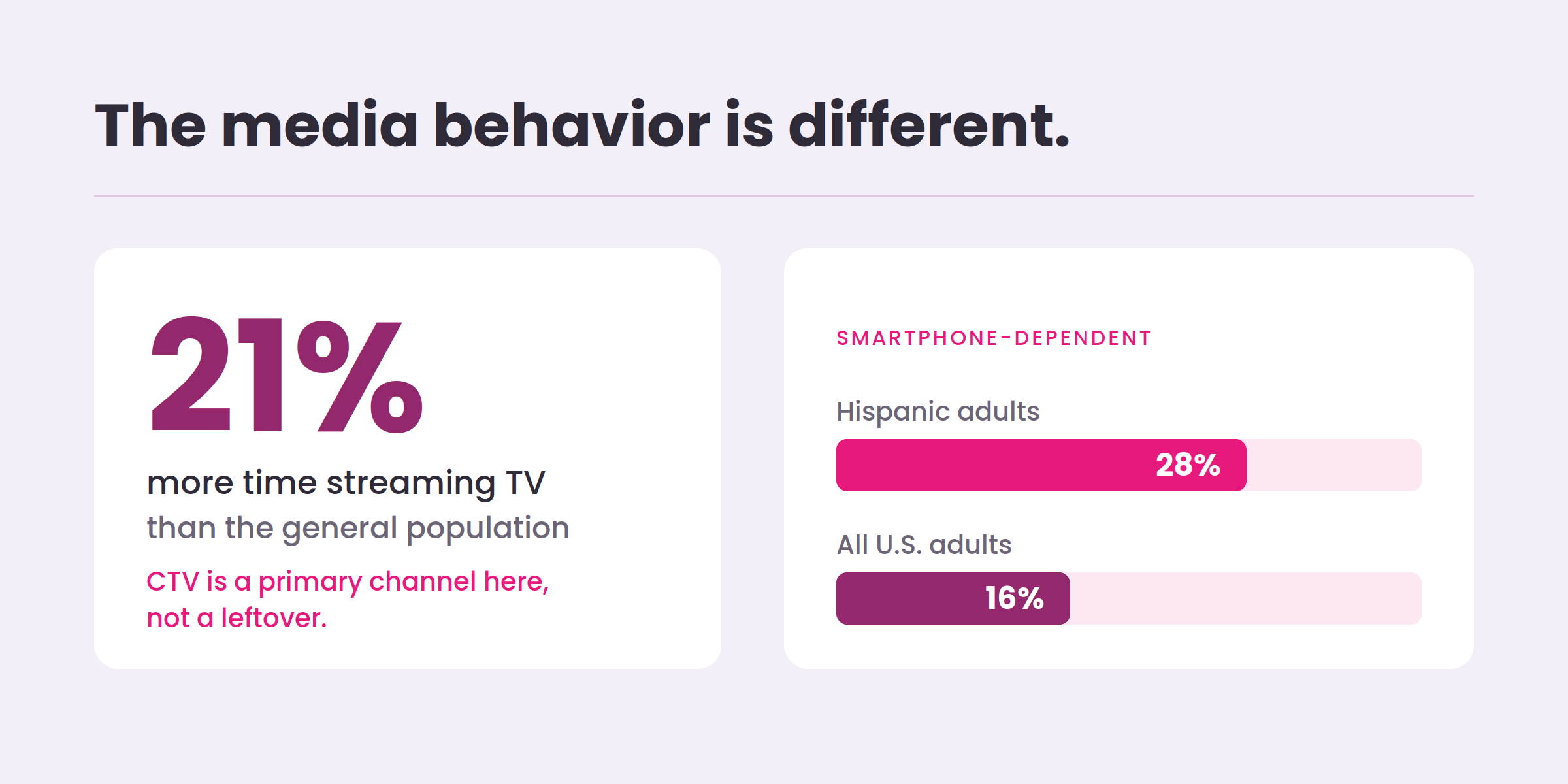
Two behaviors that should change the plan
Hispanic audiences spend about 21% more time streaming TV than the general population. CTV should carry real weight rather than absorbing what is left after linear.
28% are smartphone-dependent, versus 16% of all U.S. adults. That means the phone is the only reliable internet access, with no desktop fallback. Heavy load times, desktop-first landing pages, and long forms lose this segment. When that happens, the media plan usually takes the blame for a creative problem.
How language targeting works
No single signal is sufficient, so they get layered.
Language and content signals read browser language, content language, and Spanish keywords. They identify Spanish consumption well and English-dominant Hispanic consumers poorly.
Geographic signals use census-informed Hispanic ZIP codes, including for DOOH. This reaches the English-dominant and bilingual consumers language signals miss, but works at neighborhood level rather than individual level.
Third-party segments let you plan against the three-way split directly. They are modeled rather than observed, so quality varies by provider.
Spanish-language inventory is contextual reach, not audience targeting. It should be one input, not the whole plan.
Where these campaigns get misjudged
Hispanic plans skew upper-funnel, because much of the spend goes to CTV, audio, and DOOH. Then they get graded on click-through rate, which none of those channels is built to produce.
Brand lift measures awareness and consideration against a control group. Footfall attribution ties store visits to DOOH and mobile exposure. Incrementality isolates conversions that would not have happened otherwise, which is the answer to the objection that a Hispanic line item just re-reaches the general market buy. At least one of these should be a condition of the buy.
The short version
Reaching Hispanic consumers is a segmentation and creative exercise, not a translation exercise. The largest part of the audience is not Spanish-dominant at all. Plans that start from language behavior reach more of the audience and waste less of the budget.
banMe Media is a Hispanic-founded media partner. We use audience intelligence and research to inform every media strategy and buy. Contact us here to get started.